Best 6 emissions calculators in 2026

Find out which is the best CO₂e emissions calculator for transport and logistics operations in 2026
{{highlight-text}}
Last updated: August 2026
Note: The information in this article is based on publicly available details at the time of writing. Vendors may update their offerings, so we recommend checking the provider’s official website for the latest information.
Whether you’re measuring emissions for the first time or you’ve been managing your company’s emissions for a while, having the right carbon emissions calculator can make your life a lot easier. And it can improve your chances of achieving your targets as companies that use carbon accounting software are 2.5x more likely to achieve their emission-reduction targets.
But with so many options to choose from, which is the right CO₂ emissions calculator for your needs? We’ll now go through the best 6 emissions calculators in more detail.
Best emissions calculators for transport and logistics emissions in 2026
Each solution was evaluated based on publicly available information and suitability for companies with logistics emissions, namely, LSPs, carriers, shippers, and field service companies.
1. BigMile
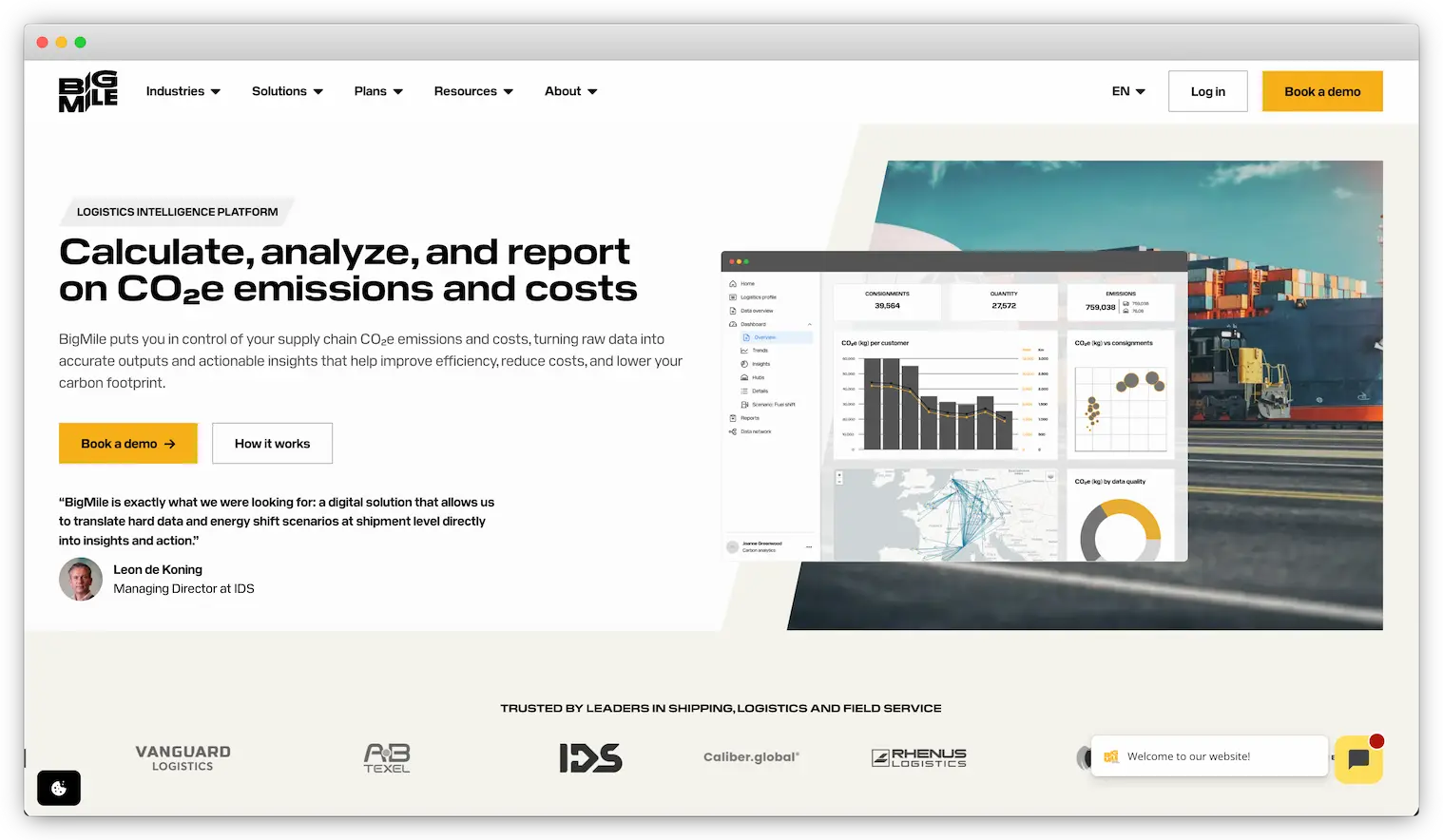
BigMile combines an emissions calculator with advanced logistics intelligence to help LSPs, carriers, shippers, and field service companies calculate, analyze, reduce, and report on CO₂e emissions and costs. It uses primary operational data instead of industry-average estimates for maximum accuracy, and complies with ISO 14083, the GLEC Framework, and the EU's new CountEmissionsEU.
Advanced analytics within the platform enable users to analyze historical emissions data and explore carbon and cost reduction strategies through scenario modeling. This means that companies can pinpoint lower-emission transport routes and present them as options to their customers. For shippers working with multiple carriers, this also means one standardized view to compare carrier performance instead of piecing it together manually.
Shipment-level reports and dashboards make it easy to share verified data with customers and sustainability reporting requirements, including both voluntary standards like VSME and SBTi, and mandatory ones like the CSRD in Europe.
Many large logistics service providers already use BigMile to improve the accuracy of their emissions reporting and reduce their carbon footprint, including De Rijke Group as Martijn Scheffers, Group Project & Sustainability Manager, explains:
“As I like to say, measuring is knowing. And with BigMile we make our results visible so that we can improve over time. Together with management, we have set a goal to achieve a 30% reduction in emissions by 2030 compared to 2021. And I think we are nicely on track now, so to speak. We are well on track for where we want to go.”
Website: https://www.bigmile.eu/
Best suited for: LSPs, carriers, and shippers that want fast, accurate shipment-level CO₂e calculations backed by primary data, as well as efficiency and cost insights on their logistics operations.
2. EcoTransIT World
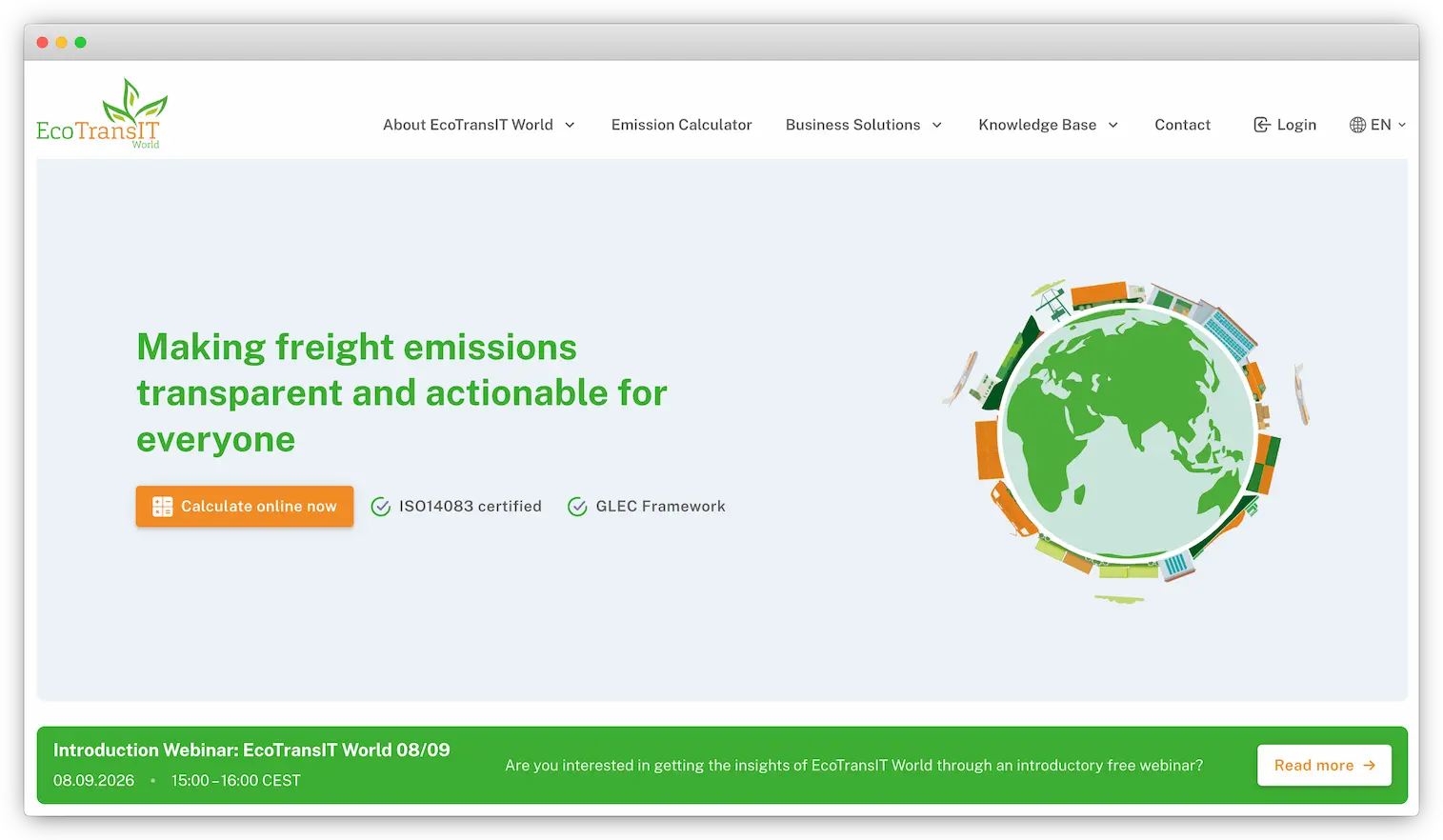
EcoTransIT World is a long-standing emissions calculator developed in Germany and used by shippers, carriers, and logistics providers to measure their transport emissions.
The emissions calculator is available online for one-off calculations, or with a licence for more regular use. It is built with an API-first approach, offering a range of APIs suitable for semi-automatic transport list calculations in CSV format to fully automatic solutions based on REST API and Soap XML Web Service (WSDL).
For companies processing bulk data via CSV, an interactive Result Dashboard powered by Power BI is also available, enabling users to filter, compare, and export emissions insights. EcoTransIT also provides consultancy services to help companies analyze and report on their transport data, and user-defined adaptations or extensions can be made available if needed.
Website: https://www.ecotransit.org/en/
Best suited for: Companies that need a reliable, standards-based emissions calculator and are comfortable managing data through APIs, bulk CSV processing with Power BI-powered analytics, or external consultancy.
3. Searoutes
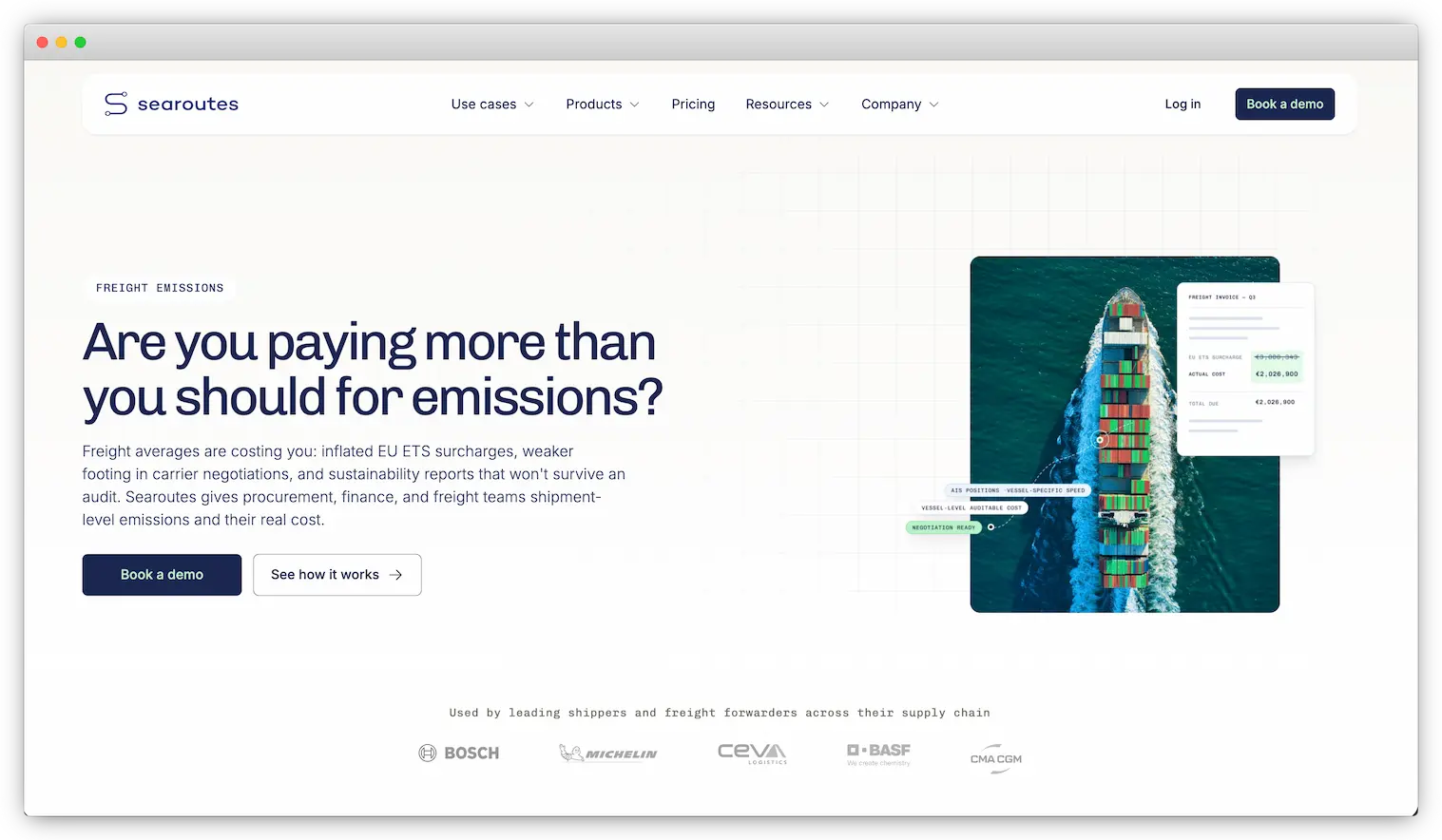
Searoutes provides a carbon emissions calculator designed for shippers, freight forwarders, and logistics providers. Using advanced algorithms and datasets, the platform calculates transport-related emissions with precision and helps its users optimize transport routes for lower emissions.
Built with an API-first approach, Searoutes connects directly with customers’ existing systems, allowing them to compare modes of transport and identify the lowest emissions option, as well as using historical route data to calculate the emissions of past journeys.
While it works for multiple transport modes (sea, road, rail, air, and inland-waters), it specializes in ocean freight transport, offering specific APIs that give real-time and historical insights into vessel routing and trips.
The Carbon Emissions API is particularly well-suited to companies that want to embed emissions calculations seamlessly into their own workflows rather than working with a separate platform focused on dashboards and reporting.
Website: https://searoutes.com/
Best suited for: Transport and logistics companies who want to embed emissions calculations into their existing systems via an API, and have less need for custom reports and dashboards to analyze, review, and share their emissions data.
4. CarbonCare
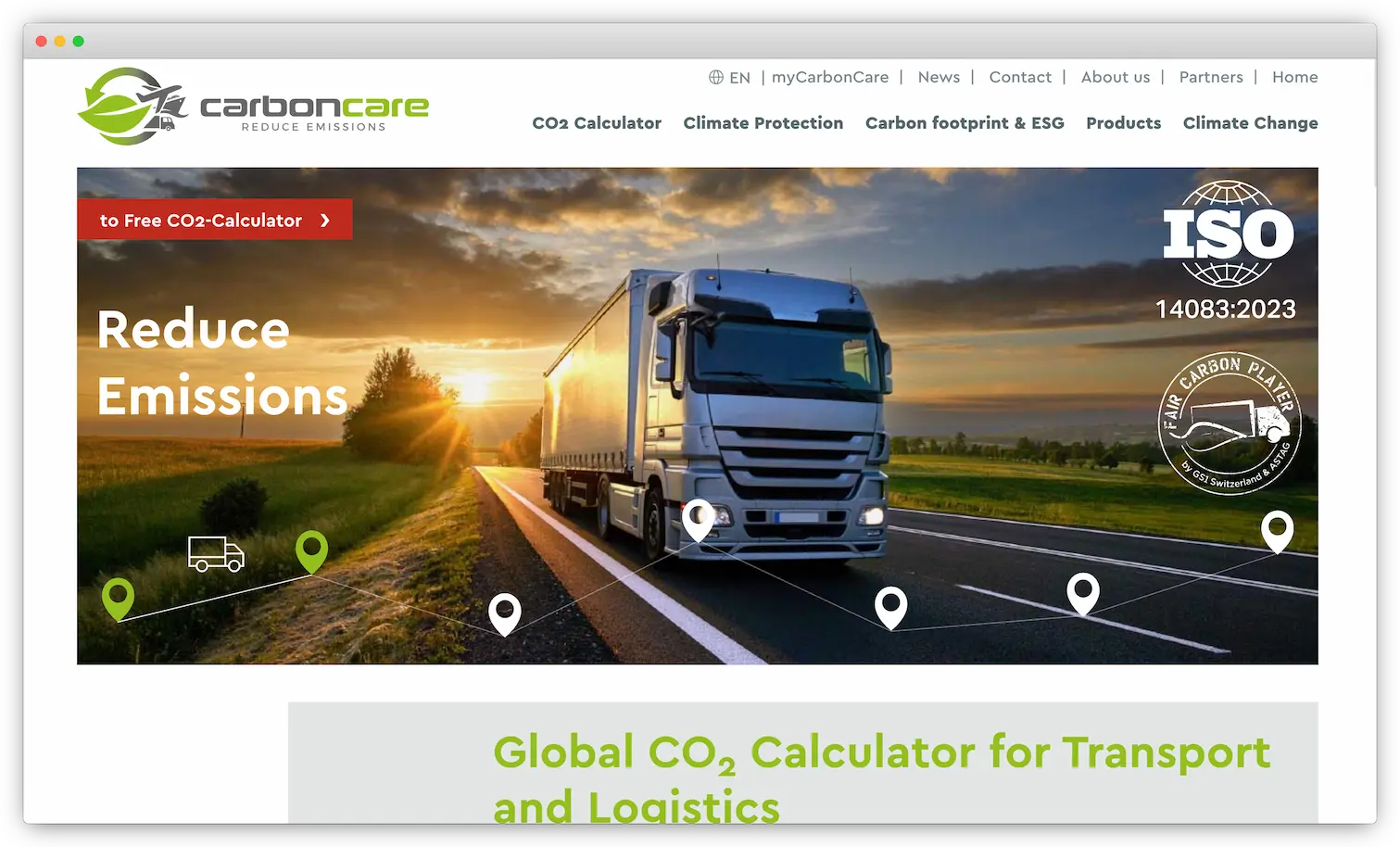
CarbonCare offers a global CO₂ emissions calculator built specifically for transport and logistics companies. It covers all transport modes and uses a methodology that is aligned with the latest ISO 14083 standard. Its Swiss road freight calculations are also validated under ASTAG’s Fair Carbon Player industry guideline. CarbonCare also provides an API that integrates with its customers' existing TMS.
A free web tool is available for occasional calculations but regular users can purchase one of three license packages: Basic, Business, or Platform. The packages have a core price and additional services are available as needed, including analytics and data storage services, emissions certificates, project management, and ‘fleet values’ which uses actual consumption values from the customer’s vehicles.
CarbonCare also gives its customers the opportunity to offset CO₂e emissions by purchasing CO₂e certificates from certified climate protection projects.
Website: https://www.carboncare.org/en
Best suited for: Transport and logistics companies that need access to an emissions calculator covering multiple transport modes, but don’t need advanced customer-facing dashboards, detailed breakdowns of emissions data or in-depth scenario modeling.
5. Loginex
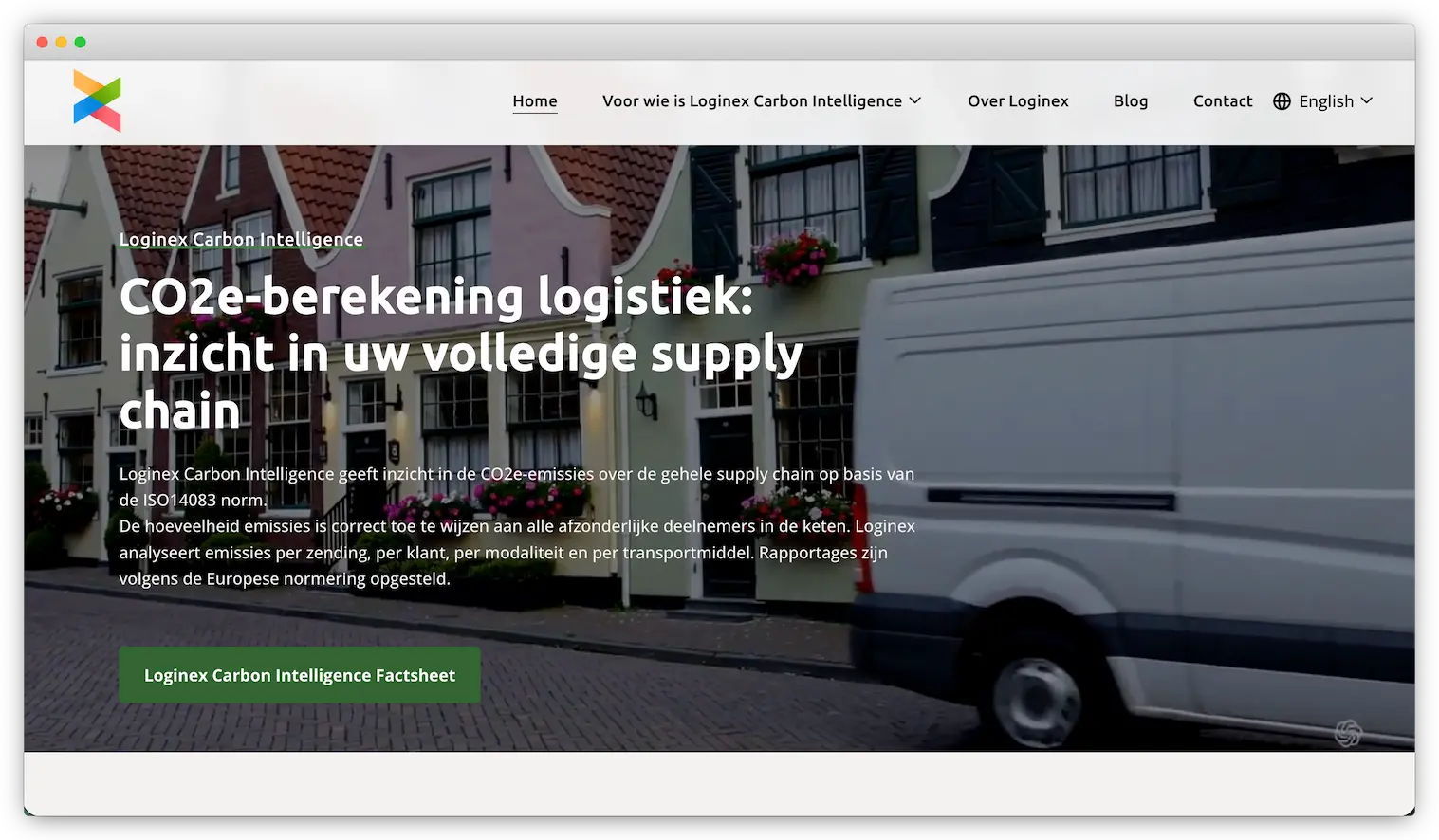
Loginex Carbon Intelligence is a platform designed to help logistics companies accurately measure their emissions and comply with European regulations.
It calculates CO₂ emissions in line with the ISO 14083 standard, providing results at the level of shipments, customer, and transport modes. These insights are useful for both regulatory and client reporting, but also help users identify ways to reduce their overall carbon footprint with emissions reduction measures.
In addition to audit-ready, compliant emissions reporting, the platform provides tools for supply chain optimization and benchmarking, helping users reduce their carbon footprint.
Website: https://loginex.ai/
Best suited for: Europe-based LSPs, carriers, shippers, and consultants that need a reliable, regulation-focused tool for emissions calculation and reporting.
6. In-house solution

Despite the range of carbon accounting software available, some logistics and transport companies still choose to develop their own emissions calculator, whether that is a basic Excel spreadsheet or a custom-built software.
While this approach offers flexibility, it often comes with significant drawbacks. Excel-based methods require ongoing manual work and are prone to errors, while building a proprietary system demands considerable time, budget, and technical expertise to maintain.
With regulations like the CSRD expanding in scope and customers increasingly requesting shipment- and transport leg–level emissions data, maintaining an in-house tool is becoming more complex and less practical compared to using certified, purpose-built solutions. Find out more about making the switch from manual spreadsheet calculations.
Best suited for: Companies with highly specific requirements for carbon accounting and the internal resources to build and maintain their own spreadsheets or systems.
How to choose the best CO2 emissions calculator for your needs
We’ve now walked through 6 options for calculating carbon emissions for logistics and transport companies, so which is the right option for you? Here are some factors to keep in mind when evaluating each emissions calculator.
- One-off vs. ongoing use: A free online tool works for a single estimate but if you need to track emissions over time, you'll outgrow it fast.
- Primary data vs. default factors: Check whether you can input actual fuel, distance, and load data, or whether the tool falls back on industry-average emission factors.
- Shipment-level granularity: Some calculators only work at a route or fleet level, but you'll need shipment-level insights to spot emissions reduction opportunities and for some client reports.
- Standalone tool vs. embeddable API: Decide whether you want a quick number or a calculation engine built into your own TMS or reporting system.
- Standards alignment: Confirm the calculation methodology is aligned with ISO 14083 or GLEC so that your emissions data is accurate and suitable for use in sustainability reports and tenders.
- Cost to get started: Free and one-off tools work differently than licensed platforms, so check which one matches how often you'll actually use it.
By considering each of these factors, you’ll be better equipped to select the best CO₂ emissions calculator for your needs.
Why hundreds of logistics companies choose BigMile
If you need a CO₂e emissions calculator that goes beyond a basic online tool but is still fast to set up and easy to use, BigMile is a strong option. Companies can choose BigMile's full logistics intelligence software or the Emissions API, which integrates directly with existing TMS or supply chain software.
BigMile calculates emissions from primary operational data rather than estimates, so the numbers hold up for customer reporting, tenders, and global sustainability reporting standards. The methodology is certified to ISO 14083 and fully aligned with the GLEC Framework. For shippers working across multiple carriers, that also means one consistent way to compare performance and cost per shipment instead of reconciling different formats manually.
Want to join 250+ companies already using BigMile to accurately calculate their emissions? Book a demo today!
Sven joined BigMile's business development team back in 2020, and is now leading the company's expansion into Spain and Portugal.
In short: which emissions calculator is the best for you?
With so many CO₂ emissions calculators on the market, it can be hard to figure out which is the best one for your needs. To help you decide, we've evaluated the top 5 options in the below table: BigMile, EcoTransIT World, Searoutes, CarbonCare, Loginex, and an in-house solution.
If this is your first tie would like more information about making the switch from excel spreadsheets or external consultants to CO₂ emissions calculator then read our recent article.
.webp)