ISO 14083 explained: Who it applies to and how to comply

ISO 14083 is the global standard for calculating and reporting transport emissions. In this article, we explain what it is, who it applies to, how it connects to the GLEC Framework and CountEmissionsEU, and how to align with it.

{{highlight-text}}

What is ISO 14083?
ISO 14083 is a global standard for the quantification and reporting of greenhouse gas (GHG) emissions arising from the operation of transport chains of passengers and freight. It was first introduced in early 2023 to standardize how companies calculate transport emissions.
Over three years later, ISO 14083 is now used as the basis for many emissions calculation guides and standards, including the GLEC Framework and CountEmissionsEU.
Does ISO 14083 replace any previous standards?
ISO 14083 is the first universal method for logistics emissions accounting, replacing EN 16258. Unlike this previous standard, ISO 14083 introduces well-to-tank emissions into the calculation and allows companies to choose their own emissions factors, provided the source is credible.
What greenhouse gas emissions are covered by ISO 14083?
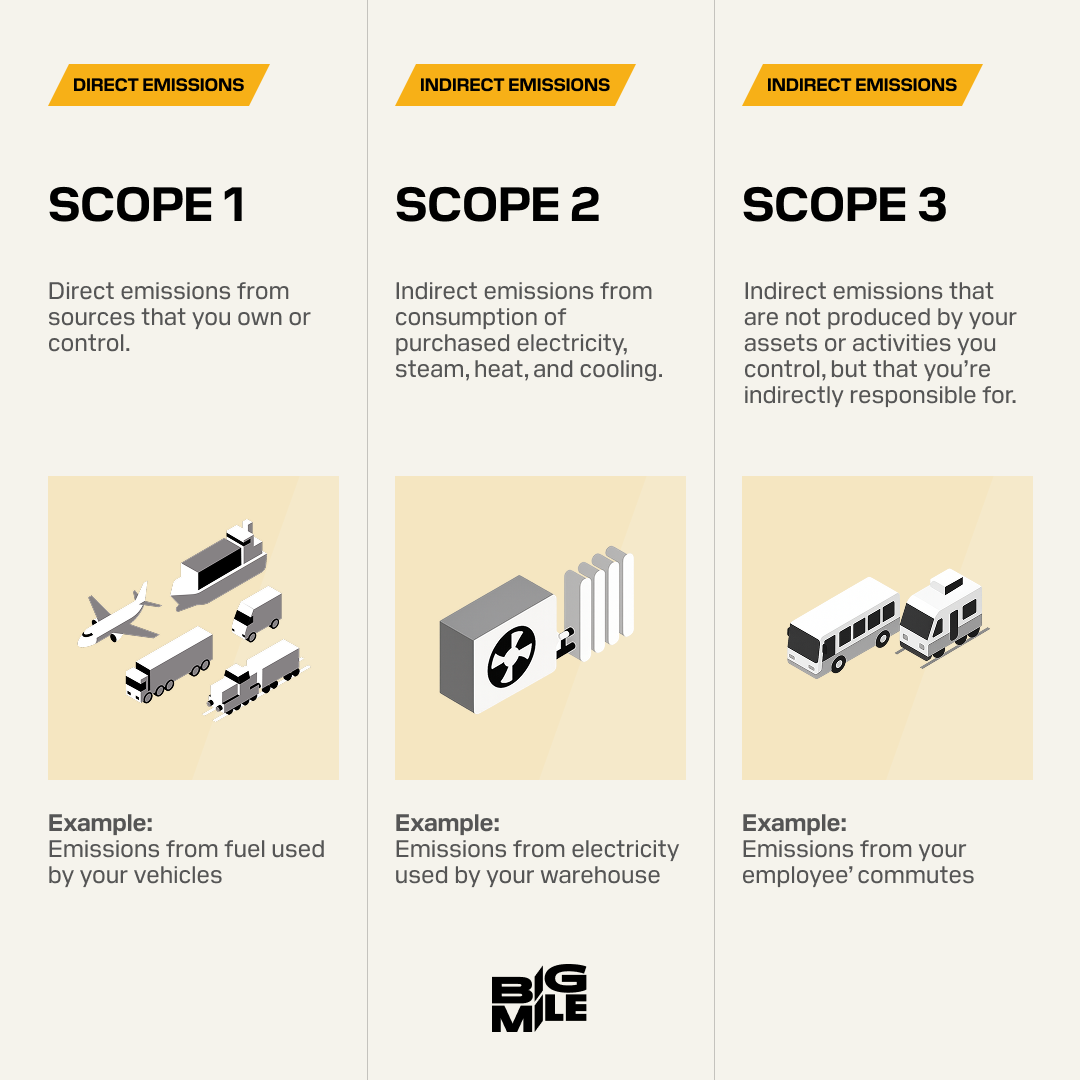
The GHG protocol classifies greenhouse gas emissions into three categories—scope 1, 2 and 3—which we explain in this blog on the different scopes of emissions. ISO 14083 doesn’t use the same terminology, instead categorizing emissions as either direct emissions (equivalent to scope 1) or indirect emissions (equivalent to scope 2 or 3).
Direct emissions are emitted from sources that you own or control e.g. emissions from trucks that you use to transport customers’ goods. Indirect emissions can be emissions from the consumption of purchased electricity, steam, heat or cooling, or emissions from assets or activities that you don’t own or control but that you’re directly responsible for e.g. emissions from your employees’ commutes to your office.
Both direct and indirect emissions types are relevant for transport and logistics companies, as they’ll need to calculate and report on their total transport emissions for their own business, as well as providing this emissions data to their clients for their reporting.
How ISO 14083 connects to other global and regional standards
As previously mentioned, ISO 14083 forms the basis of several other emissions calculation methodologies around the world. Let’s have a look at the main ones now:
The GLEC Framework
The GLEC Framework acts as a practical guide to help companies calculate emissions in line with ISO 14083. It was developed by the Smart Freight Centre to harmonize the calculation and reporting of logistics GHG emissions across multi-modal supply chains specifically.
Where ISO 14083 sets out the technical requirements and principles, the GLEC Framework translates these into accessible, actionable guidance, making it easier for companies to implement compliant emissions calculations. It covers all major transport modes including road, rail, sea, and air, and provides mode-specific emission factor guidance and calculation methodologies.
The GLEC Framework is widely used across the logistics industry and recognised by major reporting frameworks including the CDP and the Science Based Targets initiative (SBTi). The latest version of the GLEC Framework v3.2 is available for download here.
CountEmissionsEU
CountEmissionsEU is a new EU-wide regulation agreed at European Council and Parliament level in November 2025 that establishes a single calculation method for greenhouse gas emissions from passenger and freight transport. Its goal is to make emissions data more consistent, comparable, and reliable across the EU.
The CountEmissionsEU methodology is built on ISO 14083 standards, including prioritising the use of primary data over estimates and applying the same emissions calculation principles across all transport modes (road, rail, sea, and air).
Publishing GHG emissions remains voluntary for many companies in Europe, however if a company chooses, or is asked by a customer, to calculate and disclose its transport emissions it will need to do so in line with the CountEmissionsEU framework. That means it’s important for companies already calculating emissions that they’re using an approach aligned with CountEmissionsEU or similar standards in their region.
How to calculate emissions in line with ISO 14083 and other global standards
The easiest way to align your emissions calculation with ISO 14083, the GLEC Framework, CountEmissionsEU, or other standards is by using carbon accounting software that meets these standards. Alternatively you can manually calculate CO₂e emissions though manual calculations make it harder to maintain ongoing alignment as standards evolve.
BigMile is designed with these global standards in mind and is an accredited partner of the Smart Freight Centre. Using a carbon accounting software like BigMile doesn’t only help you comply with ISO 14083, it also brings real benefits to your business, including:
- Transparently providing emissions data to your clients, partners, and investors
- Identifying cost-efficient ways to reduce your carbon emissions
- Winning more tenders and retaining existing clients by showing a clear commitment to emissions reduction
- Hassle-free compliance with sustainability-related requirements
Want to learn more about getting started with carbon accounting? Book a demo with one of our sustainability experts.
Ivo is an experienced logistics professional who is passionate about helping companies get started with carbon accounting.
In short: What is ISO 14083 and who does it apply to?
- ISO 14083 is a global standard for the quantification and reporting of greenhouse gas (GHG) emissions arising from the operation of transport chains of passengers and freight.
- ISO 14083 applies to any company that has transport emissions, but it is mainly directed at shippers, carriers, and logistics service providers (LSPs) who provide transport and logistics services.
- Many global and regional emissions calculation standards and guides are based on ISO 14083, including the GLEC Framework and CountEmissionsEU.