How Aviko reduces Scope 3 emissions across its global transport operations
Aviko, one of the world's largest potato-product producers, uses BigMile to accurately calculate, analyze, and report on its Scope 3 transport emissions. This both supports its sustainability reporting under regulations like the CSRD and helps reduce emissions across its transport operations in collaboration with its carriers. Read more below.
8,000 producers
Aviko transports food products from 8,000 producers across Europe and China.
4 years
Publishing annual sustainability reports since 2022 for transparency and to comply with requirements like the CSRD.
30% reduction
In transport emissions, supporting its aim of achieving a third Lean & Green star for CO₂ reduction.
Join 250+ companies using BigMile to calculate, analyze, and report on their emissions
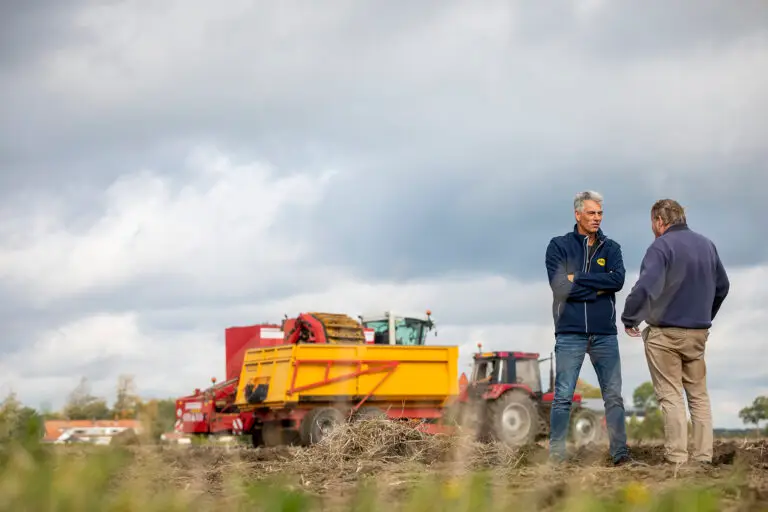
Aviko is one of the world's biggest potato processing companies, working with 8,000 producers to supply customers in more than 100 countries. Its transport activities are operated almost entirely by a network of third-party carriers, meaning that tracking and reducing Scope 3 emissions is crucial to its sustainability efforts.
We sat down with María Angélica Viceconte, Project Officer for Supply Chain, to hear how Aviko uses BigMile to manage and reduce Scope 3 transport emissions across their supply chain.
The challenge of managing emissions when transport activities are outsourced
Sustainability has been part of Aviko since the company's founding, as Angélica puts it: “Sustainability is not a marketing strategy at Aviko. It's in the DNA. It's in every step, in every activity we carry out.”
While the Aviko team handles supply chain planning in-house, transport operations are almost entirely outsourced to third-party carriers. This places nearly all of Aviko's transport emissions in Scope 3, which can be difficult to measure credibly, because the primary data sits with its carrier partners rather than with Aviko itself.
To meet its sustainability reporting obligations and make smart decisions across its transport operations—such as fuel switches or carrier contracts—Aviko needs a single source of truth for its global transport emissions, with a consistent calculation approach for every carrier.
Calculating Scope 3 emissions in one platform
Aviko has been using BigMile for the last 3 years, to more efficiently centralize data from all carriers and accurately calculate and analyze its global Scope 3 emissions.
Carriers that use BigMile themselves simply share their data with the click of a button, while other carriers send their emissions data to Aviko’s supply chain team who upload it to the platform. Either way, carrier data is validated and standardized within the platform to ensure the highest level of accuracy.
As Angélica explains: “There's always that confidence behind the tool. It means you trust that the data calculation is based on the standards you need. Those standards are the standards for measuring CO₂. We have a level of certainty in data processing that you wouldn't have if you tried to do the calculation manually.”

María Angélica Viceconte, Project Officer for Supply Chain
Collaborating with carriers to reduce carbon footprint and costs
With its Scope 3 emissions data in one platform, Aviko can identify emissions hotspots and have more meaningful, data-backed conversations with its network of carriers to reduce emissions such as fuel type changes or load optimization.
Angélica describes how this works: “We're sharing information, we're building a report jointly, and we're looking at this report, which is a BigMile output, to figure out how we're going to plan that reduction together going forward.”
But it doesn’t stop at conversations about historical emissions. The supply chain team also uses BigMile to model alternative fuel scenarios for different routes or carriers so it can determine which sustainability investments will have the most impact in terms of emissions and cost reduction.
Angélica explains how they use the energy shift scenarios tool: “This gives you a guide as to what action you should spend more time and more money on, in order to reach the final objective, which is reducing the cost of CO₂. I'd say all actions based on CO₂ reduction are also oriented to cost reduction.”
Getting reliable data for sustainability reporting and executive-level insights
For the past four reporting cycles, Aviko has used BigMile to calculate the transport emissions disclosed in its annual sustainability report, including mandatory disclosures under the EU's Corporate Sustainability Reporting Directive (CSRD).
This consistent calculation method means Aviko can compare data from reporting cycles with confidence. For example, the team spotted a year-on-year drop in emissions between 2023 and 2024 on one part of the distribution network and traced it back to a specific operational change they had already made. They brought the finding to leadership as concrete evidence that the change was delivering measurable reductions.
For Angélica, insights like these are where the platform delivers real value: “We use it, we get results, and the mandatory sustainability reports are being completed…but for the transport section and that combination of links in the chain, that's what makes the tool more valuable every day.”
Advice for food and beverage companies getting started with emissions calculation
For other food and beverage companies looking to get their carbon accounting in order, Angélica gives three pieces of advice:
- Pick the right team first: The platform only works when the right group is behind it, both people who interact with the tool day-to-day and a management team actively backing the work.
- Focus on using the tool to add value and reduce costs: Too often, emissions calculation tools are seen as an extra cost, but you need to recognize that they actually help you to identify emissions and cost reduction opportunities, once the data you’re using is reliable.
- Stay consistent: Sustainability returns compound across the short, medium and long term, so you need to calculate emissions using the same approach year after year.
Asked to sum it all up, Angélica compares having BigMile to having a compass: “With BigMile, you have a compass in your hand and you know where you're going, and you know what the first step is that you need to take.”
Take control of your emissions calculation and reporting with BigMile
Ready to get full visibility of your CO₂e transport emissions like Aviko? Schedule a demo to see how BigMile turns data from every carrier into reliable Scope 3 reporting and emissions reduction opportunities.
Find out how leading supply chain & logistics businesses use BigMile
Here is how companies worldwide use BigMile to measure and reduce their supply chain-related carbon footprint.


Add CO₂e emission calculations to your software and logistics operation
Join 250+ software and supply chain partners in using BigMile for CO₂e emission analytics.


